Acne: Causes, Care and Proper Treatment
- What is acne — and how does it develop?
- Factors influencing the development and aggravation of acne
- Maskne and summer acne — similar causes, different triggers
- Localization: What skin blemishes reveal about their cause
- Treating acne: The right way to deal with inflammatory skin
- Professional treatment options in the studio
- Nutrition and skin — what science says about it
- Summary: Looking at acne holistically — and treating it specifically
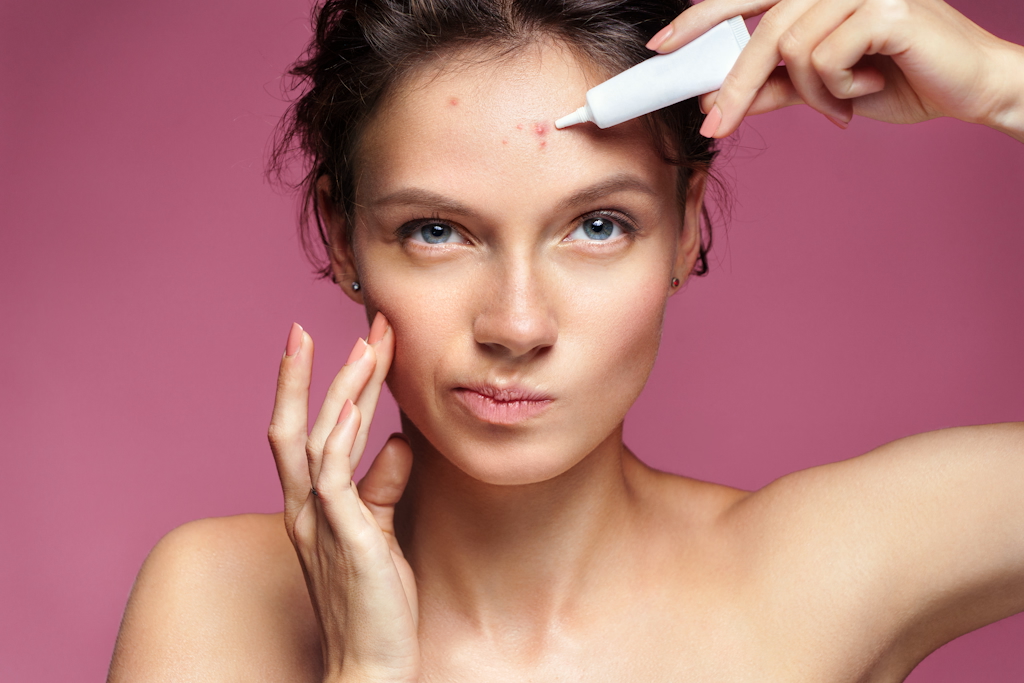
Acne is one of the most common skin conditions of all — not only among adolescents, but also among adults. While many perceive acne primarily as a cosmetic problem, it is a complex, inflammatory skin disease that must be classified both medically and cosmetically. It can have various causes and symptoms — from mild blackheads to painful cysts or hormone-related forms of acne.
In this article, we would like to address the topic of acne: from the biological principles to typical triggers and treatment options — both in home care and as part of cosmetic treatments. This includes both current dermatological findings and practical experience from our Munich salon.
What is acne — and how does it develop?
Acne (medical: Acne vulgaris) is a disease of sebaceous gland follicles. It develops when sebum, dead skin cells and bacteria build up in the pores. The result is comedones (blackheads), inflammatory papules, pustules or deeper nodules and cysts.
The four main causes of acne:
- Seborrhea (excessive sebum production):
Under the influence of hormones (especially androgens), the sebaceous glands produce more skin oil (sebum). - Hyperkeratosis (keratinization disorder):
The skin cells in the follicles are not shed properly, which closes the pores. - Colonization by Cutibacterium acnes (formerly Propionibacterium acnes):
This bacterium breaks down sebum and triggers inflammatory reactions in the process. - Inflammatory processes:
The immune system reacts to bacteria and follicle contents with local inflammation.
Factors influencing the development and aggravation of acne
In addition to the direct causes, there are a variety of factors that can promote or worsen acne. These include:
- Hormonal changes: e.g. during puberty, during the cycle, during pregnancy or when using hormonal contraception.
- Stress: increases the stress hormone cortisol, which in turn stimulates sebum production.
- Nutrition: especially foods with a high glycemic index (such as sugar, white flour) or certain dairy products.
- Medication: some drugs (e.g. cortisone, anabolic steroids) may cause or worsen acne.
- Cosmetic products: Comedogenic ingredients in particular can also clog pores.
- Climate and textiles: Sweat, friction or humid and warm climates (e.g. under masks) promote bacterial activity.
Maskne and summer acne — similar causes, different triggers
A relatively new term is “maskne” — a form of acne that results from wearing face masks regularly. It is observed primarily in everyday medical and cosmetic work, but it also affects people who wear masks in everyday life — for example when traveling, on public transport or in overcrowded indoor spaces.
Professional assessment from our beautician:
“Maskne is basically synonymous with so-called summer acne — both are promoted by a moist, warm skin environment that closes the pores and promotes inflammatory processes.”
Breathing, sweat and friction create a microclimate under the mask, which weakens the skin barrier, clogs pores and accelerates bacterial activity. The skin appears stressed and reacts with pustules, papules and a feeling of tightness — especially in the cheeks, chin and nose area.
So-called summer acne develops under similar conditions: high temperatures, humidity, UV radiation and increased sweating also lead to a skin environment that promotes inflammatory processes.
Localization: What skin blemishes reveal about their cause
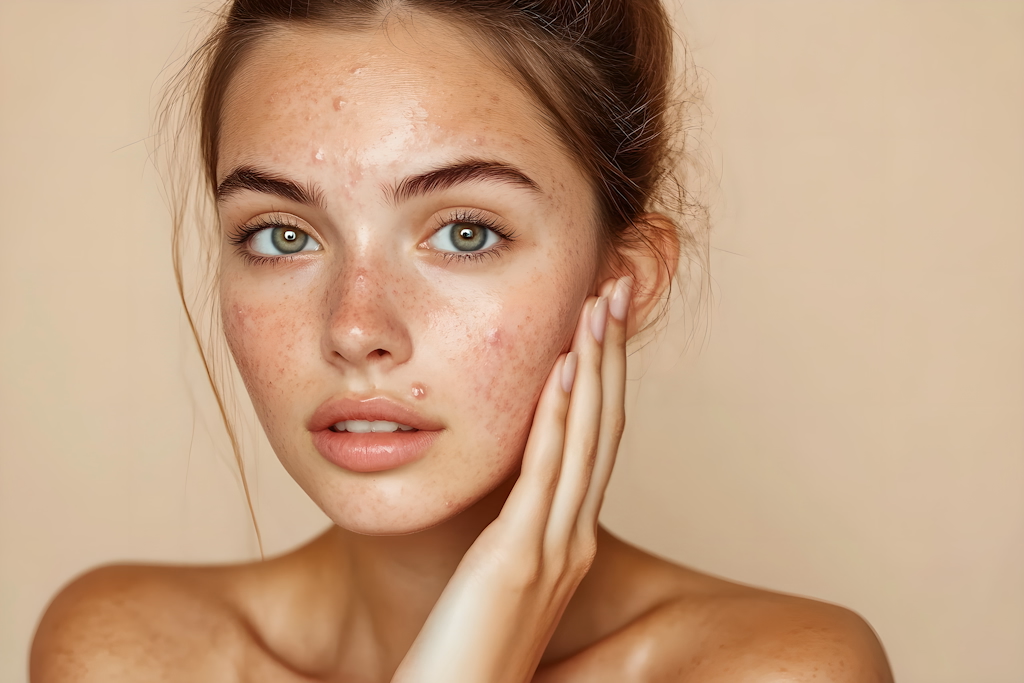
The distribution of acne can provide clues as to its cause. In our salon, we have been working for years with so-called zone analyses to develop individual care approaches.
- Forehead - stress, hormonal imbalances, styling products
- Chin & jaw - cycle-related or hormonal acne
- Cheeks - mask friction, bacterial load, makeup
- Back/chest - sweat, friction from clothing, exercise
Treating acne: The right way to deal with inflammatory skin
A well-thought-out care plan helps to stabilize the complexion in the long term. The following applies: less is often more. Overtreatment, aggressive peels or irritating products can further damage the skin barrier.
Our 4-step recommendation:
- Cleansing - pH-neutral, alcohol-free cleansing in the morning and evening — e.g. with mild gel or foam.
- Peeling - Chemical peeling with BHA (salicylic acid) or AHA (e.g. mandelic acid) once a week — avoid mechanical peels.
- Moisturizer - Non-comedogenic gel creams or serums with ingredients such as niacinamide, zinc PCA, or panthenol.
- Sun protection - Daily UV protection with SPF 30+ — even in cloudy weather. UV radiation increases inflammation and promotes pigmentation.
Additional active ingredients such as azelaic acid or retinal (vitamin A) can have a supportive effect — ideally after consulting a specialist.
Professional treatment options in the studio
In our salon, we offer targeted treatments that are tailored to your skin's individual needs:
- Slightly oily skin - Clean your skin - Manual cleansing+detox mask
- Hormonal acne - Hydra Memory - Fruit acid peeling 4
- Sensitive skin - Facial Treatment Sensitive - Soothing mask + moisturizing serum
- Maskne/summer acne - one of the above treatments, depending on skin type and needs
Our treatments always start with a professional skin analysis and are individually adapted to the current skin condition.
Nutrition and skin — what science says about it
Several studies show that certain diets can influence the appearance of the skin — although not to the same extent in all people:
- A diet high in sugar (high glycemic index) can promote inflammation.
- Dairy products (especially low-fat) are suspected of promoting acne in certain people.
- Probiotics and a gut-friendly diet show potentially positive effects in recent studies
Summary: Looking at acne holistically — and treating it specifically
Acne is not a trivial matter, but an expression of internal and external influences. Treating it requires not only patience, but also the right understanding of skin physiology, care products, and lifestyle factors.
In contrast to pure cosmetic advice, at Salon Sandra von Gneisenau, we offer well-founded skin analyses, individually tailored treatment plans and long-term support. Professional coordination is particularly crucial for more complex cases such as hormonal acne, maskne or sensitive skin.
Consultation & appointments
If you would like to understand your skin better and give it targeted support, we warmly invite you to come in for a consultation. Our experienced skin experts will take time for you — whether for classic acne treatment or advice on caring for your skin at home.
References
- Reynolds RV, Zaenglein AL, et al. Guidelines of Care for the Management of Acne Vulgaris. J Am Acad Dermatol. 2024. (AAD guideline, topical/systemic drugs & good practice, including photoprotection). Link: https://www.jaad.org/article/S0190-9622%2823%2903389-3/fulltext
- Teo WL. Diagnostic and management considerations for “maskne” in the era of COVID-19. J Am Acad Dermatol. 2021; 84 (2) :520-521. Clinical criteria for maskne (acne mechanica). PubMed: https://pubmed.ncbi.nlm.nih.gov/33011321/
- Korting HC, et al. The influence of the regular use of a soap or an acidic syndet bar in acne-prone skin (RCT). Acta Derm Venereol 1995; 75 (6) :449-451. PubMed: https://pubmed.ncbi.nlm.nih.gov/7622270/
- Chen X, Wang S, et al. Chemical Peels for Acne Vulgaris: A Systematic Review of Randomised Controlled Trials. BMJ Open. 2018; 8:e019607. Full text: https://bmjopen.bmj.com/content/8/4/e019607
- Shalita AR, et al. Topical 4% nicotinamide vs. 1% clindamycin in inflammatory acne (randomized, double-blind). Int J Dermatol. 1995; 34 (6) :434—437. PubMed: https://pubmed.ncbi.nlm.nih.gov/7657446/
- Smith RN, et al. A low-glycemic load diet improves symptoms in acne vulgaris patients: a randomized controlled trial. Am J Clin Nutr. 2007; 86 (1) :107-115. PubMed: https://pubmed.ncbi.nlm.nih.gov/17616769/
- Aghasi M, et al. Dairy Intake and Acne Development: Meta-Analysis. Clin Nutr. 2019; 38 (1) :106-114. PubMed: https://pubmed.ncbi.nlm.nih.gov/29778512/
- Lin HW, et al. Efficacy of oral probiotics in patients with acne: Systematic review & meta-analysis of randomized trials. Clin Exp Dermatol 2025; online ahead of print. PubMed: https://pubmed.ncbi.nlm.nih.gov/40832719/
About the author

Sandra von Gneisenau
Sandra, the founder of the Sandra von Gneisenau Salon, sees professional skill combined with a special feel for each individual as one of the core elements of her craft in her role as managing director and stylist. Early in her career, she earned her master hairdresser qualification and took on management positions in exclusive salons in Munich. Her work with clients from Germany and abroad has shaped her understanding of quality and close client relationships. Her clients include national and international celebrities, among them well-known figures from film, television, social media and public life, who come to her because of her expertise, her discretion and their trust in her skills. Her training and hands-on experience allow her to work at the highest level and to understand and realize her clients' wishes precisely. In her articles, she offers deep insights into her professional expertise and her experience with a wide range of clients, making her a well-informed advisor on beauty and finding your personal style.
You can find more information about Sandra and her career here
About Sandra
We place great importance on the quality and authenticity of our articles. Learn more about how we create our content and make sure it is based on sound expert knowledge:
Our transparency notice
Share article
.svg)
.svg)
.svg)
.svg)
.svg)


.svg)